






Privacy Policy at BC Poker – A Plain-Language Guide to How Player Data Is Handled
Privacy policies often feel technical, difficult to read, and full of legal terminology. However, for online gaming platforms, understanding how personal information is handled can be just as important as understanding deposits or gameplay rules. At BCPoker, privacy systems are generally designed around account protection, operational functionality, and minimizing unnecessary data collection.
Rather than collecting excessive information immediately after registration, BCPoker generally follows a privacy-first model focused on practical account requirements. Data may be collected to support security, payments, technical functionality, and compliance procedures, but the platform also limits certain collection practices where they are not operationally necessary. Users who complete a BC Poker app download are subject to the same privacy standards and data protection measures across all supported devices.
This guide explains how player information may be handled, what types of data are collected, and how privacy protections generally work throughout the platform lifecycle.
The Scope of BCPoker’s Privacy Policy – Who It Covers and When It Applies
The BCPoker privacy policy generally applies to users interacting with platform services, including website access, mobile applications, account registration, deposits, gameplay activity, and customer support communication.
Rather than applying only after registration, privacy practices may begin the moment a user visits the platform. Technical information related to browsing sessions, cookies, or performance monitoring may already become relevant before account creation.
Once an account is registered, additional policies may apply to financial activity, identity verification, and customer support interactions.
The purpose of defining policy scope is relatively straightforward: users should understand when personal information may be processed and under which situations privacy protections apply.
Because gaming ecosystems often involve several platform features, privacy coverage generally extends across both technical and financial interactions.
Data Minimization at BC Poker – What Is Collected and What Is Deliberately Not Collected
One important principle behind BCPoker’s privacy model is data minimization. Instead of requesting large amounts of information immediately, the platform generally limits collection to operationally useful data.
The table below shows the difference between commonly collected information and data that is not typically required during ordinary account activity:
| Commonly Collected | Generally Not Required |
|---|---|
| Email or phone number | Excessive personal profiling |
| Login credentials | Unrelated background details |
| Payment-related confirmations | Irrelevant personal information |
| Security metadata | Non-essential identity details |
This approach helps reduce unnecessary data exposure while still allowing the platform to function normally.
Instead of requesting extensive personal details upfront, many processes activate only when additional verification becomes necessary.
Registration Data: Email or Phone Number as the Only Mandatory Input
For most users, registration begins with relatively limited requirements.
Instead of lengthy onboarding forms, BCPoker commonly limits mandatory account creation details to an email address or phone number together with login credentials.
This simplified registration structure helps users create accounts faster while reducing unnecessary collection at the earliest stage.
Additional information may only become relevant later if payment verification, KYC, or account recovery processes are triggered.
For ordinary gameplay access, users are generally not required to provide extensive personal profiles during initial registration.
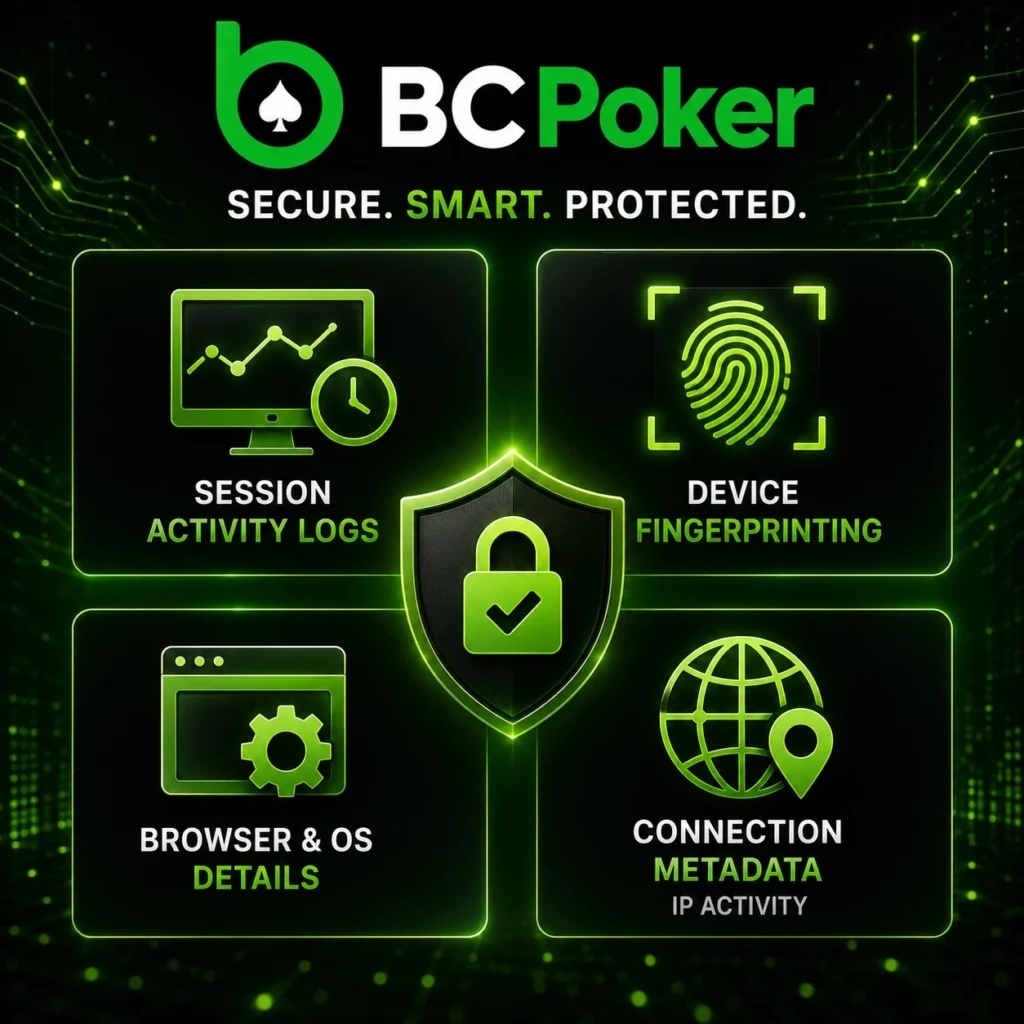
Passive Data Collection: Session Logs, Device Fingerprints, and Connection Metadata
Alongside actively submitted information, BCPoker may also rely on passive technical data collection to support platform security and performance.
This type of information generally includes:
- Session activity logs;
- Device fingerprinting data;
- Browser or operating system details;
- Connection metadata such as IP-related activity.
Rather than focusing on personal identity, this information often supports fraud prevention, account security, and technical troubleshooting.
For example, unusual login behavior may become easier to detect when session patterns differ significantly from ordinary account activity.
Passive monitoring also helps improve platform stability by identifying performance issues or connection-related errors.
Legal Basis for Data Processing at BCPoker – Why Each Data Type Is Justified
Different types of information are generally processed for different operational reasons.
Some data supports basic account functionality, while other information becomes necessary for security, financial transactions, or compliance obligations.
Rather than collecting information without purpose, platforms typically justify processing based on operational necessity.
For example:
- Registration data supports account access;
- Payment-related information helps process transactions;
- Technical metadata improves security systems;
- Verification documents support KYC obligations.
Understanding the reason behind each category often makes privacy policies easier to interpret for ordinary users.
Instead of viewing data collection as random, most processing generally connects to practical platform requirements.
How BC Poker Handles Payment Data – What the Platform Sees vs. What Processors Handle
Financial activity naturally raises questions about privacy because deposits and withdrawals involve sensitive payment information.
At BCPoker, payment systems generally operate through a separation model where external processors handle significant portions of financial processing.
In practical terms, the platform may see transaction confirmations or status information, while sensitive payment credentials are often managed through gateway providers.
This separation reduces direct platform exposure to certain financial details.
For users, the practical benefit is relatively clear: payment handling is often divided between platform systems and payment partners rather than centralized inside one environment.
Additional verification may still occur in situations involving unusual activity or payment disputes.
Data Sharing Architecture at BCPoker – Internal Access Controls and External Transfers
Privacy protection also depends on who can access information internally and externally.
BCPoker generally limits internal access through permission structures designed to restrict sensitive information only to relevant operational teams.
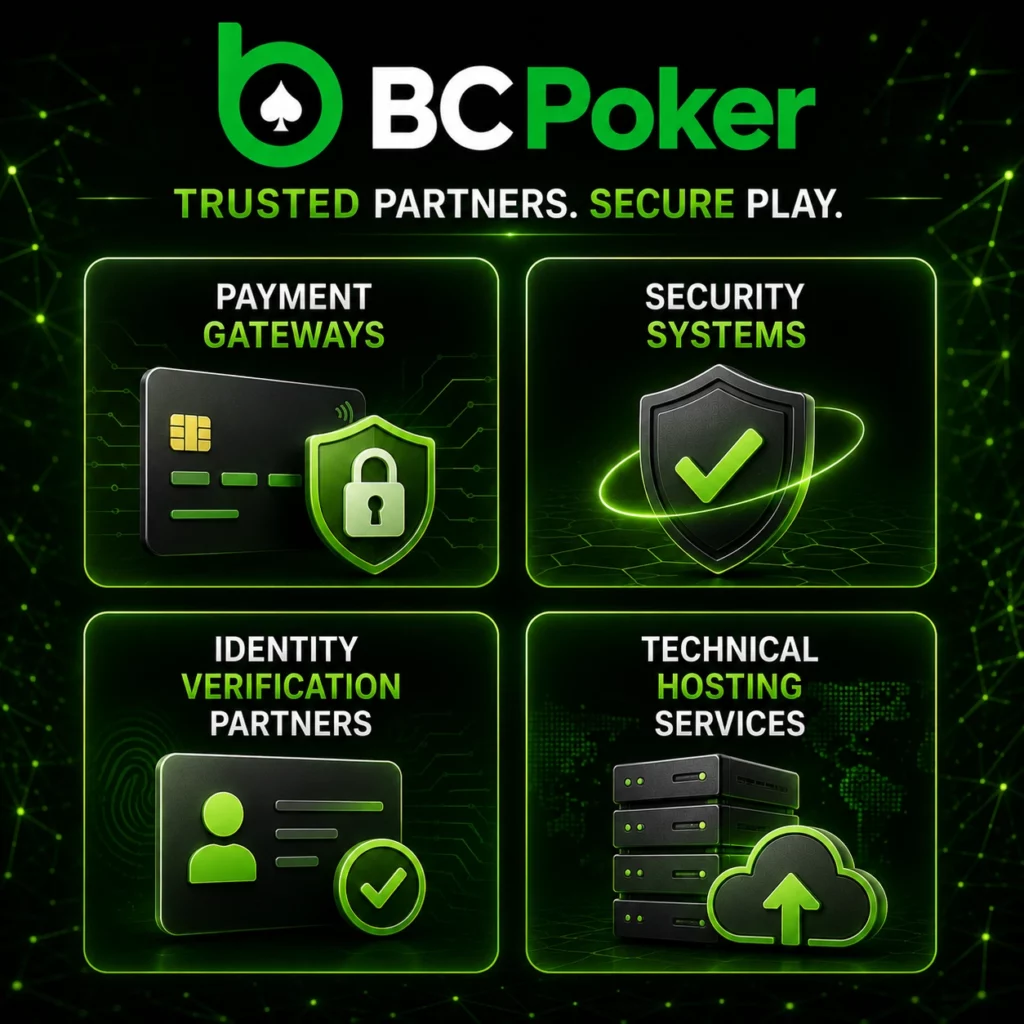
At the same time, some external sharing may occur when platform services depend on specialized providers such as:
- Payment gateways;
- Security systems;
- Identity verification partners;
- Technical hosting services.
Rather than unrestricted sharing, external transfers are generally connected to operational necessity.
This architecture helps balance functionality with privacy controls.
Incident Response at BC Poker – What Happens in Case of a Data Breach
Although security systems are designed to reduce risks, no online platform is entirely immune to technical incidents.
If a data-related issue occurs, incident response procedures generally focus on investigation, containment, and minimizing exposure.
Depending on the nature of the event, security teams may review affected systems, temporarily restrict vulnerabilities, or implement additional protective measures.
Where necessary, affected users may also receive communication regarding important account actions such as password resets or security recommendations.
Rather than ignoring incidents, structured response systems are generally designed to reduce long-term risk as quickly as possible.
Changes to BCPoker’s Privacy Policy – How Updates Are Communicated to Players
Privacy policies may evolve as platform systems, payment methods, or compliance requirements change.
When updates occur, BCPoker generally revises privacy documentation to reflect new procedures or operational adjustments.
Some changes may be minor and technical, while others may influence how information is processed or protected.
Instead of assuming privacy rules remain unchanged indefinitely, many users benefit from occasionally reviewing updated policy information.
Platform notifications, updated help sections, or revised documentation may help communicate important changes over time.